
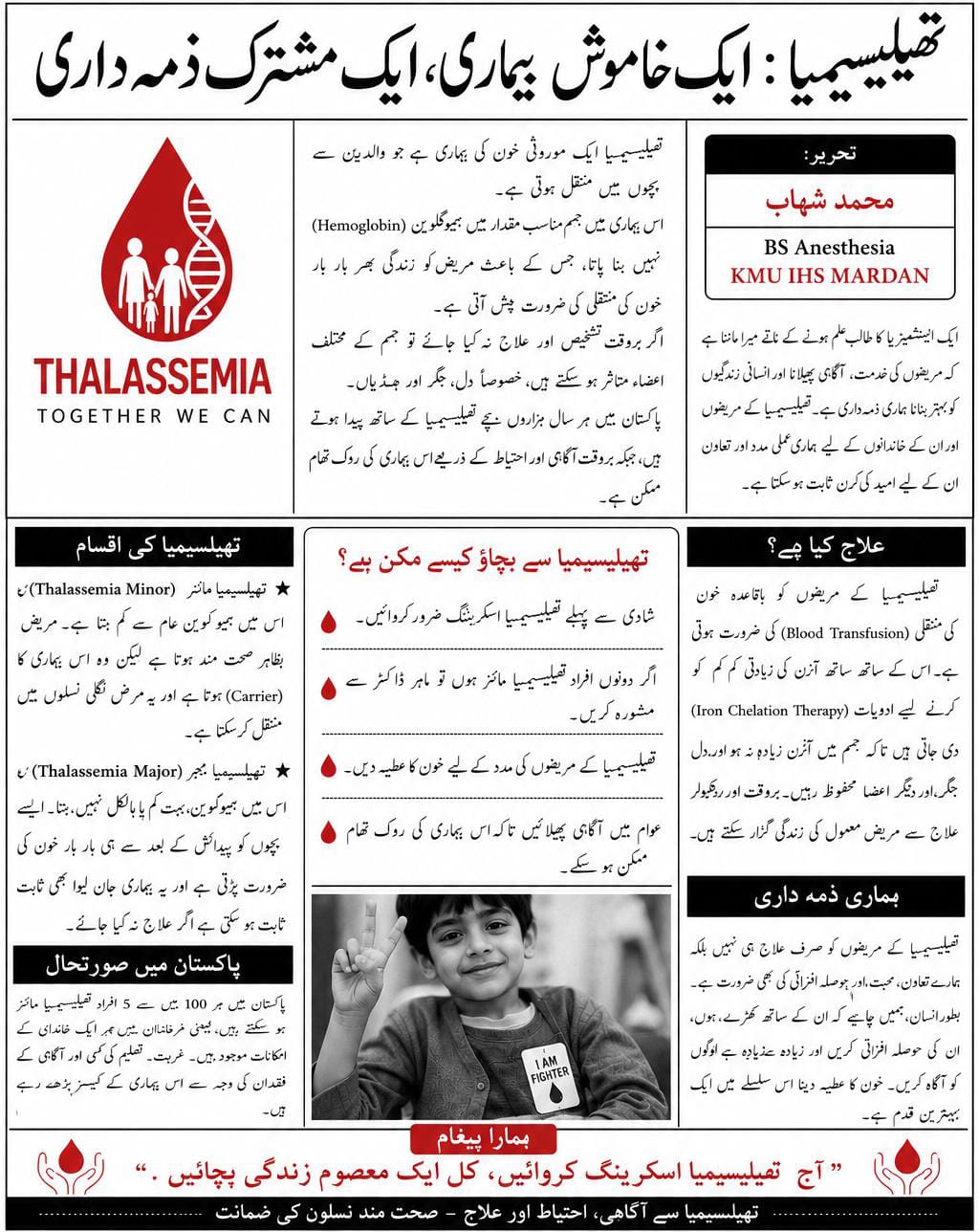
Hidden in the Blood: Why Thalassemia Awareness Cannot Wait
An awareness article prepared under the Jehaad for Zero Thalassemia (J-ZT) campaign
By Muhammad Shahab
KMU IHS Mardan | BS Anesthesia, 2nd Semester
Every few seconds, somewhere in the world, a child is born with a genetic condition that most parents have never heard of — until it changes their family forever.
Thalassemia, an inherited blood disorder, remains one of the most common genetic diseases worldwide, yet it continues to receive limited public attention. This is not a rare condition confined to medical textbooks; it is an ongoing public health concern. The gap between the scale of thalassemia and public awareness is a major factor behind preventable suffering.
The Scale of the Problem
Thalassemia occurs due to genetic mutations that affect the body’s ability to produce healthy hemoglobin — the protein in red blood cells responsible for carrying oxygen throughout the body.
It is not contagious. It is inherited from parents who carry the affected genes and can pass them to their children.
According to global health research, hemoglobin disorders, including thalassemia, affect a significant proportion of the world’s population at the carrier level. Millions of people carry abnormal hemoglobin genes, including beta-thalassemia traits, while thousands of children are born every year with severe forms of the disease that require lifelong medical care.
The burden of thalassemia is not equally distributed. It is particularly common in regions including the Mediterranean, the Middle East, South and Southeast Asia, and parts of Africa — areas often referred to as the “thalassemia belts.”
In Pakistan, studies from high-risk regions such as Balochistan highlight a concerning reality: many parents of children with thalassemia are unaware that the condition is inherited, and many people do not know about the importance of premarital and antenatal screening.
A Disease That Hides in Plain Sight
One of the biggest challenges with thalassemia is that it often remains hidden.
People who carry the thalassemia trait, known as thalassemia minor, usually have no noticeable symptoms. They can live normal lives without knowing they carry the gene.
The risk appears when two carriers have children together. In such cases, there is a chance that their child may inherit thalassemia major — the severe form of the disease that requires regular blood transfusions, iron-chelation therapy to control iron overload, and, in some cases, bone marrow or stem cell transplantation.
Children with thalassemia major usually develop symptoms within the first two years of life, including pale skin, poor growth, fatigue, and repeated infections, as their bodies struggle to produce enough healthy hemoglobin.
With proper treatment and medical support, many patients can live fulfilling lives. However, the lifelong cost of treatment can create significant emotional, physical, and financial challenges for patients and families.
Awareness: The Most Powerful Tool We Have
Although there is no widely available simple cure for thalassemia, prevention through awareness and screening can significantly reduce its impact.
Countries such as Cyprus and Iran have demonstrated the effectiveness of premarital carrier screening and genetic counseling programs. Through these initiatives, new cases of severe thalassemia have been dramatically reduced.
The science needed to prevent many cases of thalassemia already exists. A simple blood test can identify carrier status before marriage or pregnancy. The missing link is awareness.
This is the gap that community campaigns and educational initiatives aim to address.
What Every Student and Citizen Can Do
Thalassemia awareness does not require a medical degree. It requires the willingness to discuss a condition that is often overlooked.
Everyone can contribute by taking simple steps:
• Get tested before marriage
A simple blood test, such as hemoglobin electrophoresis or HPLC, can identify carrier status before it becomes a family challenge.
• Talk openly about thalassemia
Breaking the silence around genetic disorders helps reduce stigma and encourages preventive screening.
• Donate blood regularly
Patients who depend on transfusions require a stable and continuous blood supply. Blood donation is not only an act of kindness; it is a lifeline for many patients.
• Support patients and thalassemia centers
Many families affected by thalassemia face financial and emotional difficulties. Community support can make a meaningful difference.
A Future Without Preventable Suffering
Thalassemia is, in many ways, a preventable tragedy. The medical knowledge exists. The screening methods exist. What remains is spreading awareness so that individuals and families understand the importance of early testing and informed decisions.
The goal of campaigns like Jehaad for Zero Thalassemia (J-ZT) is to close this awareness gap — because every conversation, every screening test, and every donation can help save lives.
Sources Consulted
- World Thalassemia Day 2026 campaign materials ( Thalassemia International Federation)
- Peer-reviewed prevalence studies (ScienceDirect, Global Globin Network/PMC, eClinicalMedicine — Global Burden of Disease Study 2021)
- BGI Genomics Global State of Thalassemia Awareness Report
- Regional studies on parental awareness in Balochistan, Pakistan (PMC)