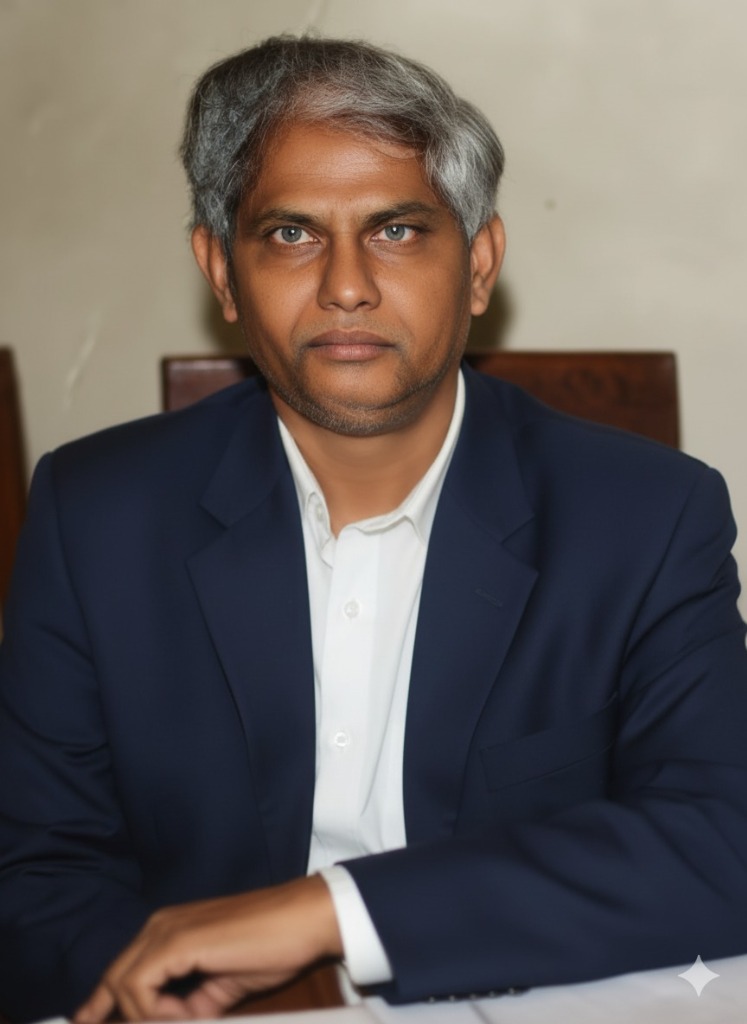
Hafeez Ulfat
Hafeez Ulfat was a veteran journalist and the founding force behind Daily Sarhad, established in 1970 in Peshawar. He dedicated nearly 75 years of his life to journalism and played a pioneering role in shaping Urdu press in Khyber Pakhtunkhwa.
He is widely recognized as one of the pioneers of modern Urdu journalism in the region, whose vision transformed regional media standards and strengthened independent reporting in Khyber Pakhtunkhwa.
Under his leadership, Daily Sarhad became the first computerized newspaper in the former NWFP (now KP), introducing digital composing and modern newspaper production techniques that replaced traditional manual calligraphic methods.
He believed in fearless, people-centered journalism and used his pen to highlight the voice of the common people. His vision turned Daily Sarhad into one of the most respected and influential newspapers in the region.
Tribute & Legacy
The Chehlum (40th-day memorial) of Hafeez Ulfat was held with great respect and devotion, where Quran recitation and collective prayers were arranged for the forgiveness of his soul.
He is remembered as a rare personality whose departure deeply saddened his students, colleagues, and admirers across the journalistic community of Khyber Pakhtunkhwa.
Known for his humanitarian spirit, he was often called "1122" for people in need, as he always helped the suffering without hesitation and considered service to humanity a religious duty.
Throughout his life, he trained young journalists with sincerity and love, leaving behind a strong legacy of ethical journalism and kindness.
"Do not search for my grave; I am still alive in the gatherings of my friends."
A man who witnessed 95 years of life, his journey is described as:
"The destiny of lamps is changing; some are extinguishing while others are lighting up."
Passing Away
Hafeez Ulfat passed away on 30 August 2023 after a prolonged illness at the age of approximately 95 years.
According to his wish, he was laid to rest beside his father Syed Abdul Aziz in Peshawar. His funeral was attended by family members, journalists, and admirers who paid him heartfelt tribute.
Chehlum Ceremony
His Chehlum ceremony was held on 5 October 2023 in Peshawar with great respect. Quran recitation and prayers were arranged for the forgiveness of his soul.
The ceremony was organized by his sons, Zahid Hafiz and Khalid Hafiz, and attended by relatives, friends, and members of the media community.
Prayers were offered for the elevation of his ranks and patience for the bereaved family.
Journalistic Journey
Hafeez Ulfat's journalistic journey began with his early work in the press industry, where he developed his identity as a committed, fearless, and people-focused journalist.
He worked with the renowned newspaper Daily Shahbaz in Peshawar as a staff reporter. During this time, he gained strong recognition for his reporting skills, discipline, and dedication to ethical journalism.
Later, he founded his own newspaper Daily Aaj Kal in 1958. Within a short period, it became one of the notable publications in the region and contributed significantly to Urdu journalism in Khyber Pakhtunkhwa.
Although the newspaper could not continue for long due to financial challenges, this phase strengthened his determination to build a more sustainable and impactful media platform.
He then established his most important journalistic milestone — Daily Sarhad in 1970. This newspaper became a landmark in Khyber Pakhtunkhwa journalism and earned widespread respect for its independent and people-centered editorial policy.
A major historic achievement under his leadership was the transformation of Daily Sarhad into the first computerized newspaper in the former NWFP (now Khyber Pakhtunkhwa). He played a pioneering role in shifting from traditional manual calligraphic newspaper production to modern digital computer-based composing and layout systems.
This innovation significantly improved publishing speed, accuracy, and design quality, setting new standards for regional journalism and inspiring other newspapers in the province to adopt modern digital methods.
Under his leadership, Daily Sarhad also became a training ground for young journalists, many of whom later joined leading national media organizations across Pakistan.
Through Daily Sarhad, Hafeez Ulfat established a lasting legacy built on truth, integrity, public service, and journalistic independence.
Personality, Mentorship & Professional Influence
Hafeez Ulfat was widely respected not only as a journalist but also as a mentor and guide for young reporters. He believed that journalism was not just a profession but a mission of truth, responsibility, and public service.
Throughout his long career, he trained countless young journalists who later became part of major newspapers and media organizations across Pakistan. Many of them still remember him as a strict but deeply caring teacher of journalism.
He maintained strong relationships with renowned literary and journalistic figures of his time, including personalities like Mano Bhai and Shafqat Tanvir Mirza, who were his close contemporaries and friends in the field of journalism and literature.
Hafeez Ulfat was known for his calm personality, humility, and ethical approach. He never allowed personal interest or pressure to influence his editorial decisions. His principle was always based on honesty, fairness, and public interest.
He strongly believed in promoting Urdu journalism in Khyber Pakhtunkhwa and worked tirelessly to strengthen the regional press. His efforts helped shape a new generation of responsible journalists in the province.
Despite facing financial challenges and professional difficulties at different stages of his life, he never compromised on journalistic integrity and always stood firm on his principles.
His colleagues and students often describe him as a man of patience, wisdom, and kindness who avoided conflict and always preferred dialogue and understanding in professional matters.
Hafeez Ulfat's legacy is not only reflected in his newspapers but also in the journalists he trained and the ethical standards he established in regional journalism.


Historical Context & National Journalism
Hafeez Ulfat witnessed several important political and historical phases of Pakistan's development, including different civil and military governments. His journalistic career expanded across decades of national transformation.
He observed major political eras such as the governments of Ayub Khan, Zulfiqar Ali Bhutto, General Zia-ul-Haq, and others, reporting and analyzing events with a professional and balanced approach.
During his career, he also participated in international press assignments. He traveled abroad for journalistic coverage, including visits to countries such as Denmark, Syria (Damascus), and Saudi Arabia.
In Damascus, he witnessed historical Islamic sites and visited important religious landmarks, which deeply influenced his spiritual and cultural understanding.
He also performed Umrah during his journalistic journey and was part of official press delegations that were invited to cover international conferences and state-level events.
One of his notable assignments included covering an international conference of Foreign Ministers of Islamic countries held in Rabat. He was selected by the Press Information Department of Pakistan for official media coverage.
After the conference, he was also invited for a royal hospitality program in Saudi Arabia, where journalists and delegates were honored as state guests.
Hafeez Ulfat always considered such experiences as milestones in his journalistic life and remained grateful for opportunities that connected him with international media platforms.
His reporting style reflected not only national awareness but also a deep understanding of global political and cultural dynamics.
Faith, Spiritual Reflections & Philosophy of Life
Hafeez Ulfat's life was deeply connected with faith, spirituality, and Islamic values. He believed that journalism, at its core, should reflect truth, justice, and moral responsibility guided by ethical principles.
He regularly visited religious places and held deep respect for saints and scholars. His worldview was shaped by a strong belief in service to humanity as a form of worship and moral duty.
He performed Hajj and Umrah and always expressed gratitude for being able to visit the holy lands. These spiritual journeys had a lasting impact on his personal and professional life.
He often emphasized simplicity, humility, and honesty, and encouraged younger journalists to stay away from materialism and unethical practices.
In his reflections on life, he often highlighted the temporary nature of the world and the certainty of death, reminding people that every soul must eventually return to its Creator.
"O traveler of this world, life is only for a few days. Your destination is the grave, and a simple shroud is your final covering."
He believed that true success lies not in wealth or status but in leaving behind good deeds, sincere relationships, and a positive impact on society.
Hafeez Ulfat's personality reflected peace, patience, and compassion. He avoided conflicts and always promoted unity, kindness, and understanding among people.
Final Tribute
The passing of Hafeez Ulfat marks the end of an era in Khyber Pakhtunkhwa journalism. His contributions will always be remembered as the foundation of ethical and people-centered journalism in the region.
He leaves behind a strong legacy through his newspaper Daily Sarhad, which continues to serve as a voice of truth and public awareness.
Generations of journalists who learned under his guidance continue to carry forward his mission and values.
May Allah Almighty forgive him, grant him the highest ranks in Jannah, and give patience to his family and admirers.
"He may have left this world, but his words, teachings, and legacy will remain alive forever."
Legacy
Hafeez Ulfat is remembered as a pioneer of ethical journalism in KP. His contribution laid the foundation for modern Urdu press in the region and inspired future generations of journalists.
Key Milestones
- 1970 — Founded Daily Sarhad in Peshawar
- Introduced modern Urdu newspaper standards in KP
- Built one of the earliest trusted regional news platforms
- Inspired next generation of journalists and media leaders
Journalistic Values
- Truth and integrity in reporting
- Voice for the public
- Independent journalism
- Promotion of Urdu language and culture